Can Pilates Help with Back Pain? What to Know Before You Start
Pilates for back pain is one of the most common searches that bring people to Studio Evolve - and for good reason. Over the past 20 years in Seattle’w Wallingford neighborhood, we’ve worked with clients who cam to us with chronic back pain, herniated discs, and post-surgical recovery. Many had been told surgery was their only option. Most of them found significant relief - and some avoided surgery entirely - through consistent, personalized Pilates sessions. Here’s what we know about why it works.
For Joseph Pilates, the founder of the method, a healthy spine was the key to physical and emotional well-being. He believed that you’re only as young as your spine is flexible. “Never slouch,” Joe Pilates advised, “as doing so compresses the lungs, overcrowds other vital organs, rounds the back, and throws you off balance.”
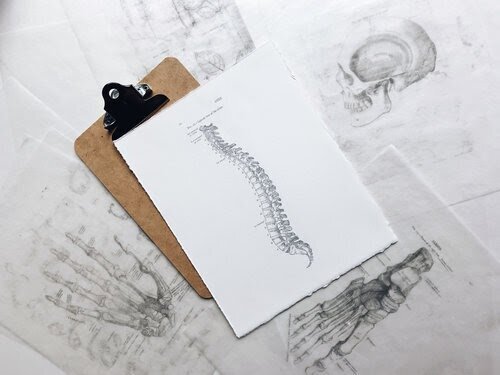
The movement method Joseph Pilates created, which he originally called Contrology, develops the deep muscles of the back and abdomen to support the spine, and uses breathing to improve posture. Joe once said with confidence, “I’m fifty years ahead of my time.”
As it turns out, he may have been right. A study published in the Journal of Orthopedic & Sports Physical Therapy found that people with chronic lower back pain who practiced Pilates for just four weeks experienced a significant decrease in low back pain and functional disability. They also maintained these results over a 12-month follow-up period.
““Our approach is part art, part science, and all about moving you through your day with more enjoyment and ease. ””
Healing back pain begins with understanding the spine.
The Basics of Back Pain & Movement
A healthy spine can move in three directions: forward and back, side to side and turning/rotating.
The structure of the spine is like a slinky or an accordion, with all the joints working in concert together. Ideally, we are able to bend the whole spine equally in all three directions. If movement in any of those directions is limited or painful, that’s a signal worth paying attention to.
Why Your Spine Gets Stuck - and What To Do About It
Habitual movement patterns (like sitting, driving, texting, and computing) can get the spine stuck.
When one part of the spine gets stuck, our bodies compensate by moving more somewhere else. So for example, if the upper back can no longer bend backwards, the low back or neck will try to take over.
Then, when we use one part of our spine more than others (like the lower back or neck) that one part will start to wear out. Think of bending a wire at the same point over and over again. Eventually that point will snap.
This can manifest as back pain, pulled muscles, a sore neck, or headaches. Left unaddressed, it can lead to herniated or compressed discs.
At Studio Evolve, we teach Pilates & Gyrotonic to equally mobilize and support all parts of your spine, creating more pliability in the whole structure of your body.
When you practice regularly, you’ll also strengthen the deep abdominal and lower body muscles that support your spine - which tend to weaken when you spend a lot of time sitting.
By practicing thoughtful movements with a caring teacher, you’ll create new muscle memory that, over time, begins to work even when you’re not thinking about it. This reduces pain and likelihood of injury over time.
Many of our clients who came to us with back pain have felt it reduce dramatically as they increased their strength and flexibility. People who used to accept pain as a permanent part of their life now go days - sometimes weeks - without it.
Most clients notice a shift within their first few sessions. For lasting change - the kind that stays with you when you’re hiking, traveling or just moving through your day - regular practice is what makes the difference. Once you’re ready to commit to a consistent practice, we have a range of pricing options to make that sustainable.
We are a very forward-facing world. Sitting, driving and screen time all pull us into the same position for hours at a time - which gradually shortens the hip flexors and hamstrings, weakens the deep abdominal muscles and trains the head forward off the shoulders. Each of these changes puts extra load on parts of the spine that weren’t designed to carry it alone. Over time, that’s how acute pain becomes chronic pain.
My instructor was knowledgeable and patient. She explained and demonstrated the activities very well, and the activities themselves felt good!
— LINDA M.
Why back pain is so hard to shake
Back pain is so persistent partly because the body is good at adapting. When something hurts, we unconsciously shift how we move to protect it - and those compensations become habits. Before long, the original injury may have healed but the movement patters it created are still running the show.
For some people back pain is chronic - a low-level presence that never fully goes away. For others it’s acute, tied to a specific injury of incident. And for many, it’s somewhere in between. you may not be able to name exactly what’s causing it. That’s okay - that’s actually part of what we do together in your first sessions.
how we approach back pain at studio evolve
We start by helping you get to know your unique posture and how you move. We look at which parts of your spine are moving freely and which aren’t; your seated and standing alignment; your hip and hamstring flexibility; and where your head sits in relation to your shoulders.
Our sessions are designed to equally mobilize and support all parts of your spine, creating more pliability in the whole structure of your body. Pilates uses spring-based equipment that gives you feedback for proper alignment as you activate deep core musculature. Gyrotonic works differently - using a combination of weights on pulleys and dynamic fluid movement to traction your spine into length while building strength. The two methods complement each other well, and many of our clients with back pain do both.
Both approaches build the kind of strength that shows up in how you carry yourself - taller, more supported and with less effort.
By practicing thoughtful movements with a skilled and caring teacher, you gradually rewire how your body moves, and over time, that new pattern starts to work even when you’re not thinking about it. That’s when the real shift happens.
Want to learn more about caring for your back pain with Pilates?
If back pain has been holding you back from hiking, traveling, keeping up with your kids or grandkids, or just moving through your day comfortably, we’d love to talk. Get started with our 2 private Session Intro Offer and we’ll build a plan around your body, your history and what you actually want to be able to do.